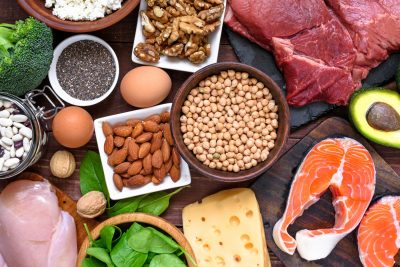
Food is medicine
Dr. Hyman — who is the director of the Cleveland Clinic Center for Functional Medicine, and founder and director of The UltraWellness Center — believes that food has the power to change our health and reverse chronic illness. His philosophy is that food is medicine — and he often tells his patients to get their nutrients from plants, fruits, nuts, seeds and oils, high-quality meats and sourced fish, not from vitamin supplements, if possible.
How paleo and vegan diets are similar
There is a lot of crossover when it comes to these two diets. They both focus on real, whole, fresh food that is sustainably raised. Both are high in vegetables and fruits — although the paleo camp suggests you stick to lower glycemic fruits, like berries. Both stress eating organic, no or low GMO foods, without chemicals, additives, preservatives, dyes, MSG or artificial sweeteners. They both cut out all dairy, like milk, cheese and butter. MORE: The ugly sides of meal plans: Why they’re not for everyone
How paleo and vegan diets differ
The biggest difference between them is that paleo eaters consume animal products, meat and fish. The paleo camp says if you eat animal products, they should be sustainably raised or grass-fed. And if you eat fish, it should be low in mercury and toxins — like sardines, herring, anchovies or wild salmon. Vegans do not eat animal products of any kind. We chatted with Dr. Hyman to break down the Pegan diet and compare it with some other popular eating plans.
Breaking down the Pegan diet
Grateful: Why does the Pegan diet work? Dr. Mark Hyman: While Pegan involves leaving out certain foods — like refined sugar and flour, conventionally raised animal products and chemical additives — it’s so much more focused around what we can eat for optimal health. Eating this way means you don’t have to count calories; because when you eat the whole, nutrient-dense foods, you’re naturally satiated. The Pegan diet integrates science and common sense into an inclusive food philosophy that focuses on eating the best foods. G: What is the big takeaway here? DH: The big takeaway is that our bodies are amazing, intuitive machines that know what to do when we feed them the right way. Sadly, the root cause of most chronic disease is too much bad food and not enough good food. Functional medicine examines the root causes of disease, and food is both the cause and cure for most chronic disease today, such as diabetes, heart disease, cancer and dementia. But we can change that by eating real foods, which our bodies use as energy, and by accumulating information about what controls every single aspect of our biology. MORE: Everything you need to know about the oral biome Grateful: How does Pegan differ from Whole30? DH: The biggest difference between them is that Pegan includes low-glycemic grains and legumes (except peanuts) and Whole30 does not. Whole30 also completely excludes alcohol and sugar of any kind. While I recommend limiting alcohol intake and avoiding refined sugars in the Pegan diet, you can still enjoy an occasional adult beverage or a small portion of dessert made with less-processed sweeteners like maple syrup or dates. Grateful: How does Pegan compare to the keto diet? DH: The keto diet can be really useful for some people, but it’s not for everyone. This diet was originally created to help those with epilepsy, as the ketones produced from a fat-heavy diet can actually help alter genes of energy metabolism in the brain and help to stabilize neurons that can relate to epileptic seizures. Lots of people find keto helps their brain function better and it can be helpful for weight loss. It also can be good for reversing type 2 diabetes. But going back to the personalization of diet, some people don’t feel great on keto, so we all have to find what works best for us.
Other eating plan options
Dr. Nate Favini, with Forward, says while he supports the paleo-vegan diet’s emphasis on healthy fats and vegetables, he recommends a plan closer to a Mediterranean-paleo diet. “I’ve noticed that some vegans and vegetarians rely on processed food for convenience, so I love that this is a vegan option that stays away from processed food as well,” Dr. Favini says. He says if you’re trying to lose weight or reverse diabetes, he recommends a low-carb paleo or ketogenic diet. If you’re trying to maintain your weight, lower your risk of heart disease or just eat for longevity, he wants you to include fish and a reasonable amount of whole grains, as in a Mediterranean diet. MORE: 15+ vegan recipes to try Clinical nutritionist Natalia Rose says she likes the Pegan diet over paleo or vegan diets. Rose says she prefers a vegetable-centric diet (90 percent vegetables) or the green-centric diet (90 percent green vegetables) for more advanced practitioners. In the end, though, if you do go Pegan, she recommends minimizing fruit, starches and oils and, of course, loading up on those green vegetables. Eating organic is important no matter what diet you’re on. Learn how you can grow your own fruits and vegetables in the video below.